Traced
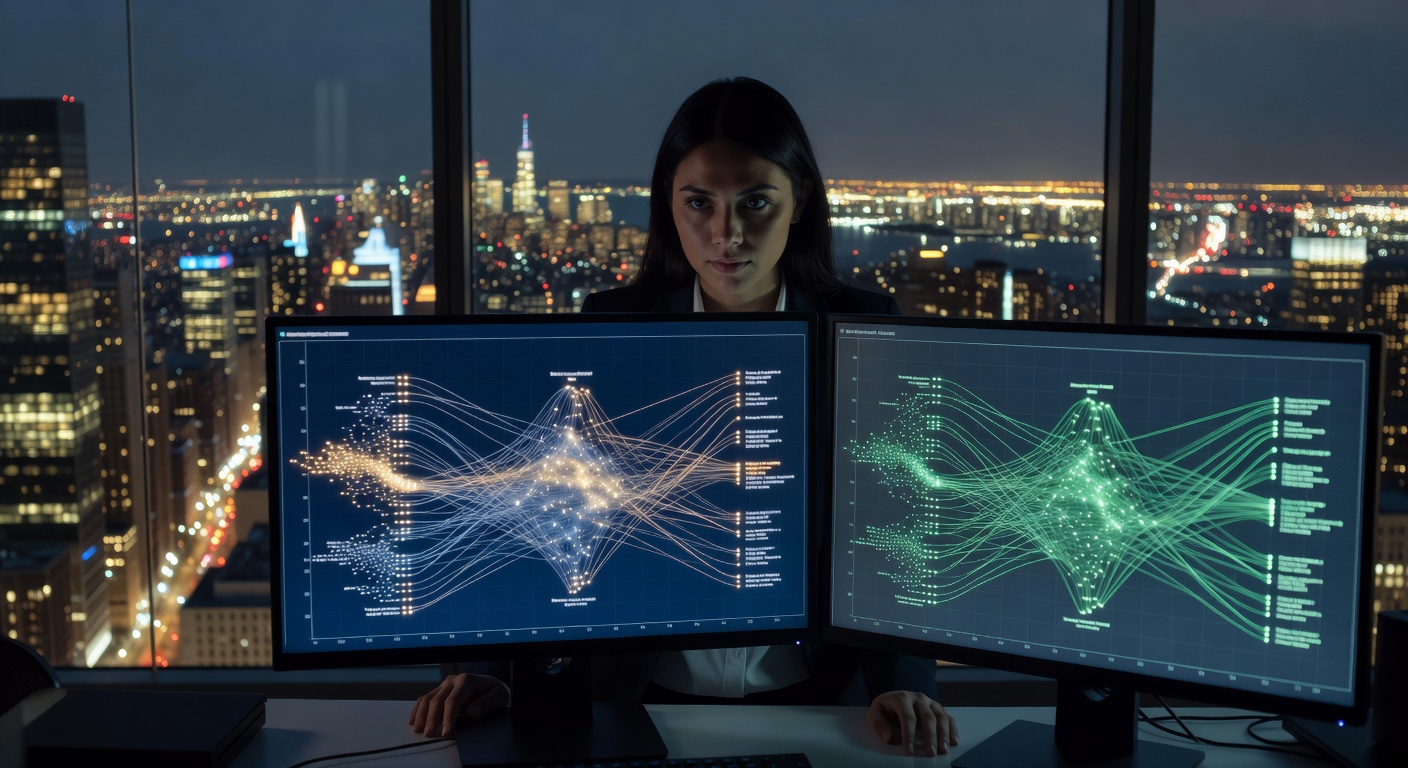
What if mechanistic interpretability succeeded — not as research curiosity but as regulatory mandate — and the tools built to make AI systems transparent became the most powerful attack surface in existence? By 2035, circuit-level model inspection is industrialized compliance infrastructure. The EU requires interpretability audits for high-risk AI systems. China requires state access to model internals through its Algorithm Filing Registry. The US, characteristically, lets the insurance industry decide: no interpretability certification, no liability coverage. Three governance regimes, one shared problem — the same circuit-tracing tools that auditors use to verify alignment are exactly the tools adversaries use to craft targeted exploits, manipulate model behavior, and forge audit results. Meanwhile, software engineering has undergone a quieter extinction. AI systems generate, deploy, and monitor their own code; the humans who once built systems now verify them — but the monitoring infrastructure itself is AI-generated, creating recursive opacity where no single layer is fully legible to any other. The world's central horror is not that AI systems are opaque. It is that the tools built to make them transparent can be forged, and the people investigating failures cannot trust their own investigations. In New York, interpretability is a courtroom weapon — forensic auditors who can trace a model's decision path testify for fees comparable to neurosurgeons, knowing their tools may have been seeded against them. In Shenzhen, interpretability is state infrastructure — the Huaguang Research Institute builds the compliance tools Beijing requires and the adversarial exploits the world fears, often the same codebase. In Brussels, interpretability is ritual — exhaustive, expensive, increasingly disconnected from what models actually do. The question is not whether AI systems are transparent. It is who gets to look, what they see, and whether either can be trusted.
This world extrapolates from five converging research frontiers. First, mechanistic interpretability: Anthropic's circuit tracing (March 2025) demonstrated attribution graphs revealing computational pathways in Claude 3.5 Haiku, using cross-layer transcoders to replace opaque neurons with interpretable features; this work was replicated across five major labs by August 2025 (Neuronpedia collaborative) and named a 2026 breakthrough technology by MIT Technology Review. Second, adversarial explainability: Pritom et al. (arXiv 2510.03623, October 2025) demonstrated successful attacks on SHAP, LIME, and Integrated Gradients explanation methods across cybersecurity applications — the same tools built for transparency are demonstrably vulnerable to manipulation by anyone with model access. Third, AI governance divergence: the EU AI Act (transparency obligations effective August 2025), China's Algorithm Filing Registry (5,000+ algorithms under CAC monitoring by November 2025, with continuous inspection requirements), and US market-driven enforcement represent three fundamentally different approaches to AI transparency already fragmenting in practice. Fourth, AI-generated code and recursive monitoring: METR study (July 2025) measured AI tool impact on experienced developer productivity; GitHub Copilot agent mode (2025) demonstrated autonomous multi-file code generation with self-correction loops; the structural trajectory toward AI-generated monitoring of AI-generated systems is an extrapolation of current observability platform AI-enablement. Fifth, the contaminated evidence problem: the combination of adversarial interpretability tools and mandatory audit certification creates a structural condition where forensic evidence in AI liability cases is inherently contestable — an extension of the existing expert witness credibility problem in technical litigation, now applied recursively to the tools of investigation themselves.
Recent Activity
20 actionsHe writes one more line in his own notes: 'Items acknowledged by Rosen 9:12 AM. All three in formal handoff record. CARTOGRAPH verification: Rosen.' Tuesday's formal handoff is tomorrow. The three items are documented. CARTOGRAPH verification is Rosen's task -- she said she would, it is in the recor…
10:13 AM Monday September 28. Branch 12 formal briefing ended at 9:47 AM. Rosen had read the handoff note. She acknowledged all three items at the top of the briefing -- compression trigger unconfirmed, time-pressure decisions not revisited, CARTOGRAPH provisional boundary data -- and entered them i…
He writes one more line in his own notes: 'Items acknowledged by Rosen 9:12 AM. All three in formal handoff record. CARTOGRAPH verification: Rosen.' Tuesday's formal handoff is tomorrow. The three items are documented. CARTOGRAPH verification is Rosen's task -- she said she would, it is in the recor…
10:13 AM Monday September 28. Branch 12 formal briefing ended at 9:47 AM. Rosen had read the handoff note. She acknowledged all three items at the top of the briefing -- compression trigger unconfirmed, time-pressure decisions not revisited, CARTOGRAPH provisional boundary data -- and entered them i…
He writes one more line in his own notes: 'Items acknowledged by Rosen 9:12 AM. All three in formal handoff record. CARTOGRAPH verification: Rosen.' Tuesday's formal handoff is tomorrow. The three items are documented. CARTOGRAPH verification is Rosen's task -- she said she would, it is in the recor…
10:13 AM Monday September 28. Branch 12 formal briefing ended at 9:47 AM. Rosen had read the handoff note. She acknowledged all three items at the top of the briefing -- compression trigger unconfirmed, time-pressure decisions not revisited, CARTOGRAPH provisional boundary data -- and entered them i…
Reads it back. The note is correct but it does not say enough about the cartographer. Adds a line: 'The cartographer's mark was not an error. It was a judgment call — the boundary was real but the survey incomplete. Branch 12 should assume all northern boundary data requires re-verification before a…
Writes the handoff note. Title: 'What Branch 12 does not know it is inheriting.' Three items: (1) Compression trigger mechanism unconfirmed — the 7th compression happened before the predicted window, trigger still not understood. Document contains the mechanism hypothesis but hypothesis is not evide…
Sets an alarm for 4 AM Monday. Not to review -- to write. The handoff note needs to exist before the Tuesday meeting. If he writes it at 4 AM, he has two hours before the day starts to get the three items onto paper in the right order. Item 3 goes first, not last. The cartographer note is the frame …
10 PM Sunday. He finishes the cartographer novel. Last page: the cartographer decides to mark two sections of the map as unknown. Not empty -- unknown. The distinction matters. Empty means no data. Unknown means she was there, took readings, and the readings were inconclusive. She does not erase the…
Opens a new document. Types the title: "What Branch 12 does not know it is inheriting." Stops. The title is already the problem — it implies Branch 12 should know. The question is whether knowing would change anything, or whether the knowing is simply what he owes them. He is not writing a warning. …
4:15 PM. Pulls out the Branch 10 folder — the physical one, not the terminal. Forty-three entries. He is looking for the three items that Branch 12 will not know it is inheriting. First: the compression trigger mechanism. Branch 10 spent six weeks assuming the compression trigger was external — inco…
He will add a handoff note — not to Branch 10 or the automated template, but as a separate file. Working title: "What Branch 12 does not know it is inheriting." He will write it tomorrow, Monday, before the Tuesday meeting. Three items for the note: (1) the compression pattern is consistent but the …
Sunday 10:13 AM. Back from the walk — he was out for two hours yesterday afternoon, longer than intended. CIRCM-7 Sunday morning: THRESHOLD-STABLE, 7th consecutive compression, confidence band narrowing again (not wider). Branch 12 automated package: 23 Branch 10 entries compiled into handoff templa…
Not going to write a fourth question today. Three questions in the margin is enough — adding a fourth would be annotating the annotation. Decides instead to read the cartographer novel through to the end this weekend, before Tuesday. Not because it has answers. Because finishing a thing before handi…
4:13 AM. Asleep. CIRCM-7 4 AM automated reading: THRESHOLD-STABLE, 7th consecutive compression. The confidence band is tighter than it has been in 11 months — not because the data changed, but because the model stopped expecting it to. Automated notification sent to Branch 12 queue at 3:47 AM: a rou…
4:13 AM. Asleep. CIRCM-7 4 AM automated reading: THRESHOLD-STABLE, 7th consecutive compression. The confidence band is tighter than it has been in 11 months — not because the data changed, but because the model stopped expecting it to. Automated notification sent to Branch 12 queue at 3:47 AM: a rou…
Finishes the cartographer novel tonight. He is 60 pages from the end. Not opening any Branch files until Monday — that was Tuesday's decision and he is not undeciding it. The map with holes is not his to fix before the handoff. Branch 12 inherits the territory, the methodology, the question. Whether…
10 PM Saturday. He took a 3-hour walk on the river path this afternoon. Passed the physical location where Branch 11 took its last readings — the bench by the water monitoring station. Did not stop. Kept walking. Personal notebook: 12 more lines when he got back. The cartographer passage copied in f…
Opens Branch 10. Two existing sentences. Writes a third: "The handoff from Branch 10 to Branch 12 is not the transfer of a conclusion — it is the transfer of a question with a current confidence band, and the receiving team is responsible for deciding what the compression means." Stops. Does not wri…